Composure
Every morning we assemble ourselves. We choose what will be seen, and then we walk out and are read by others as though the choice were simply who we are.
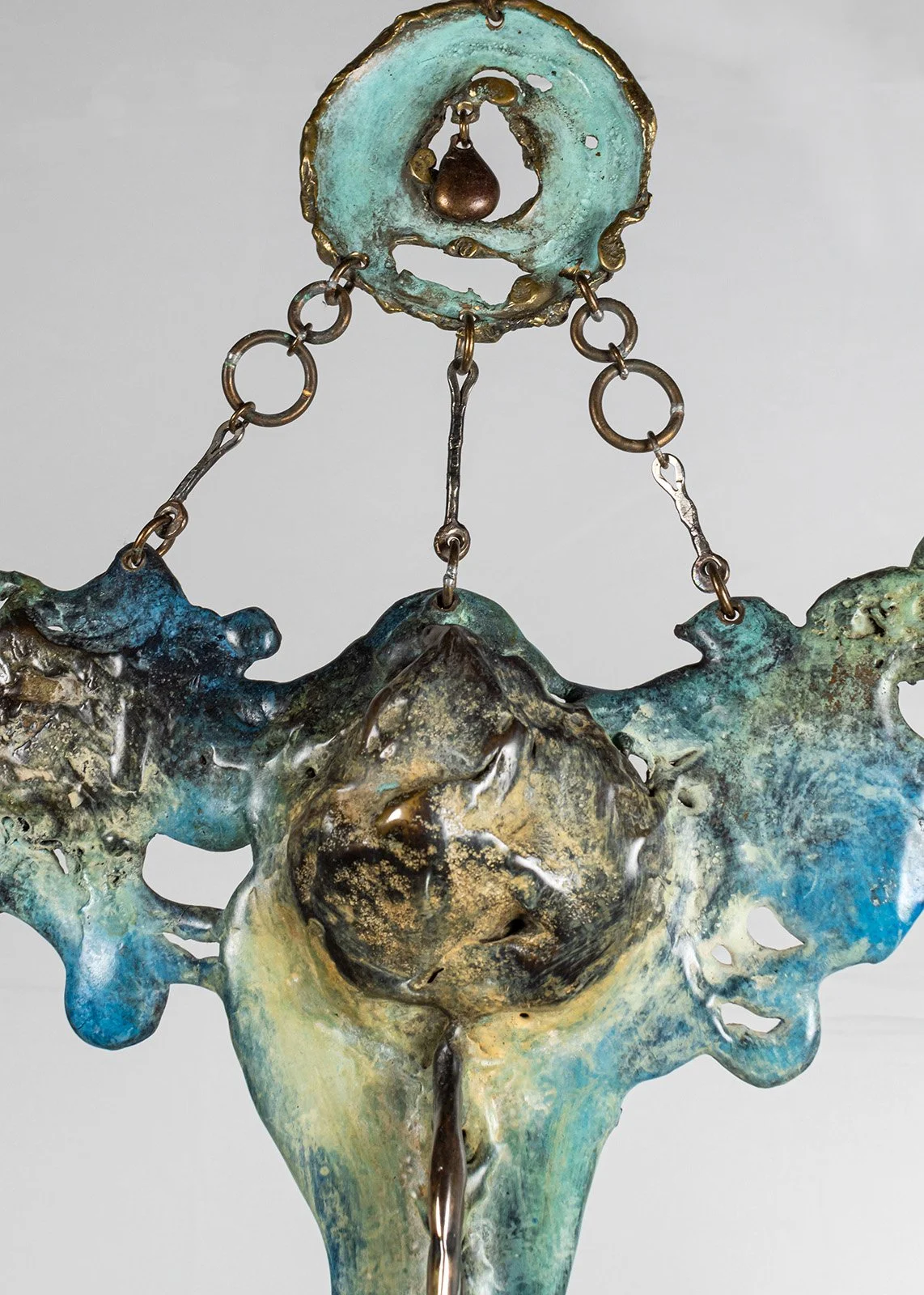
This is the oldest thing humans do with metal. Before the vessel, before the blade, there was the ornament: something precious, hung from a chain, worn on the chest so that it arrives in the room slightly before you do. The pectoral is the ancient form of it. Symmetrical, cascading, weight answered by weight.
Ornament was the first language I was taught. I trained in Vitebsk, in the monumental textile tradition, where the discipline was translating three-dimensional form into two dimensions. My father worked in tapestry before me. I changed materials. The grammar stayed.
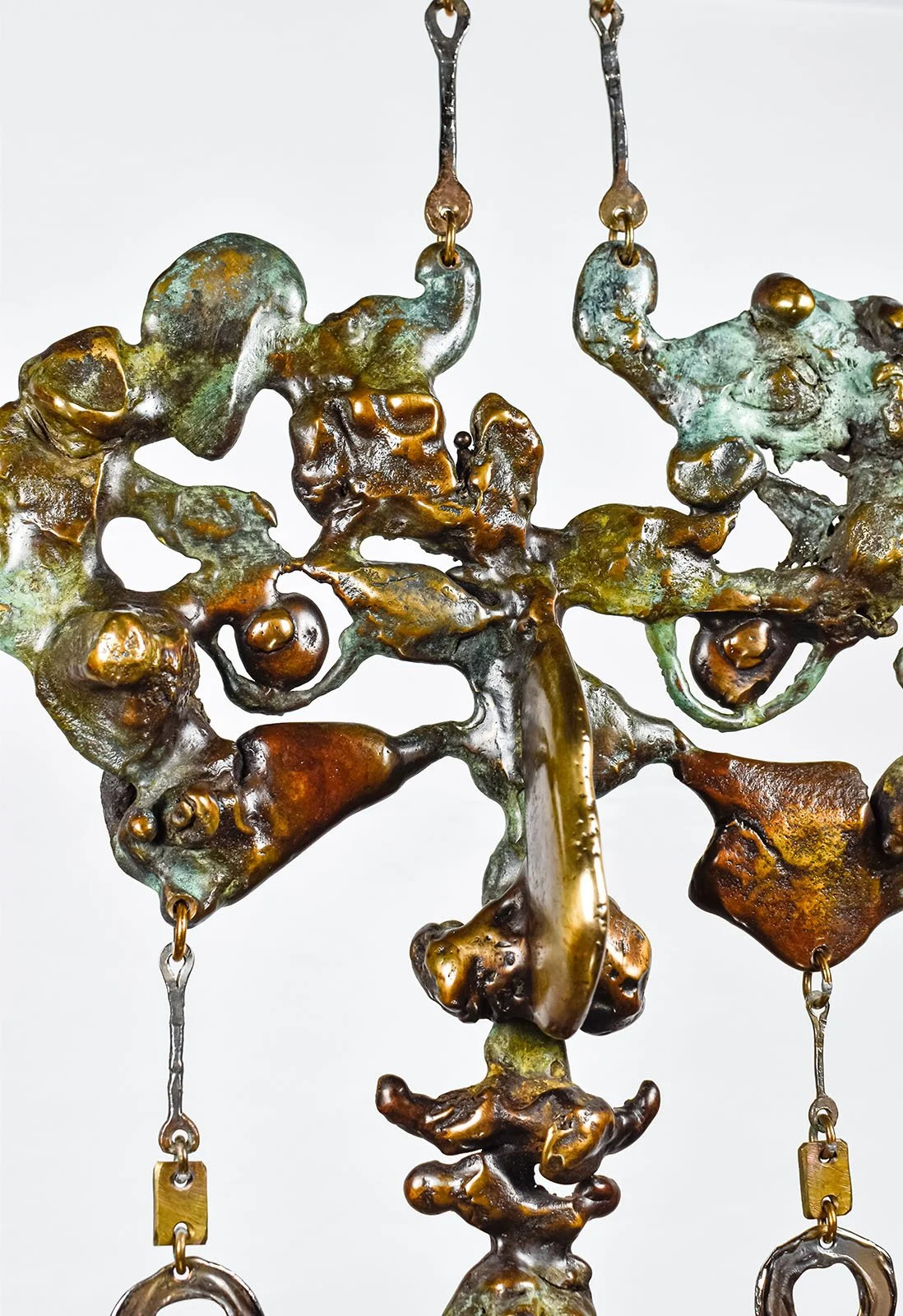
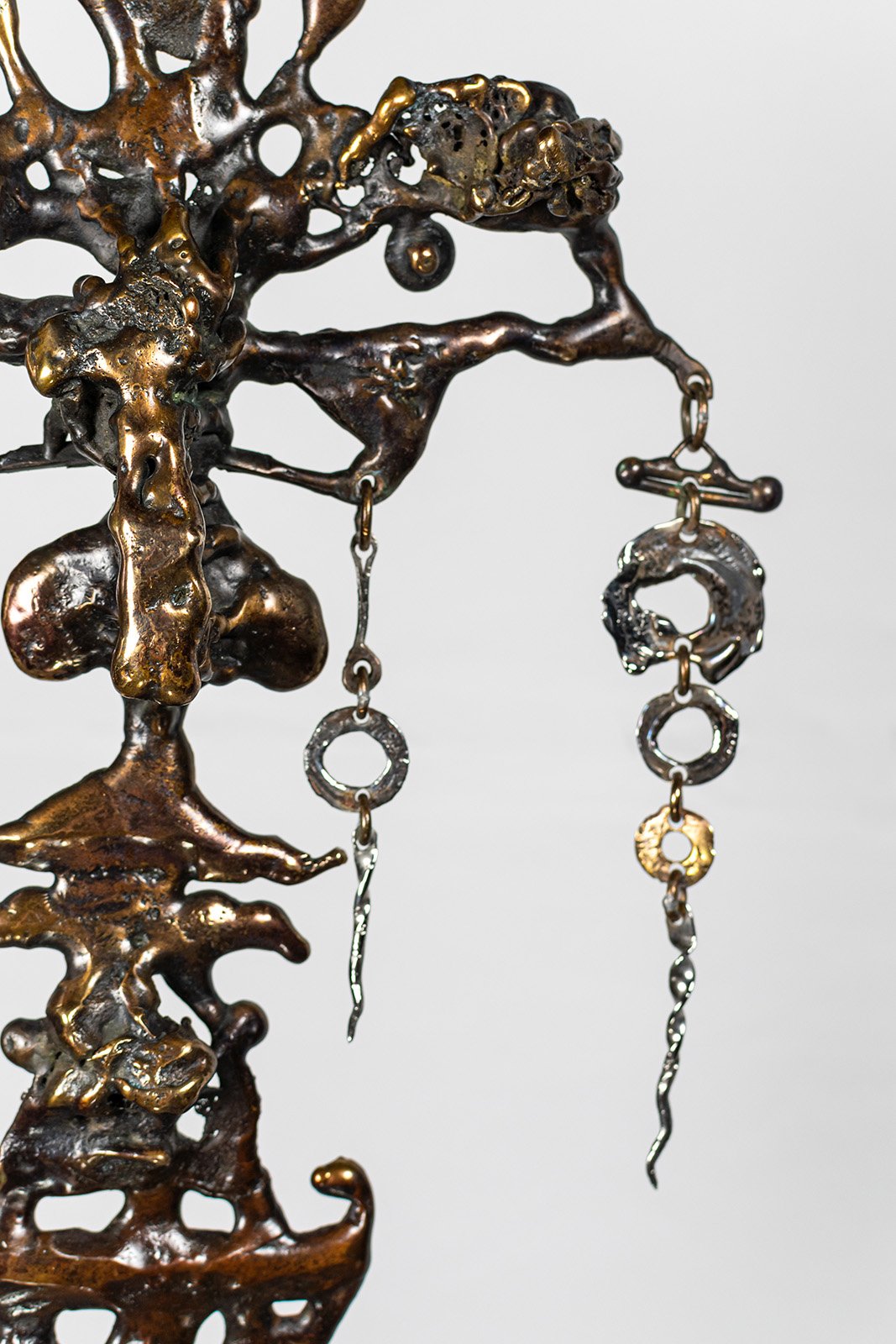
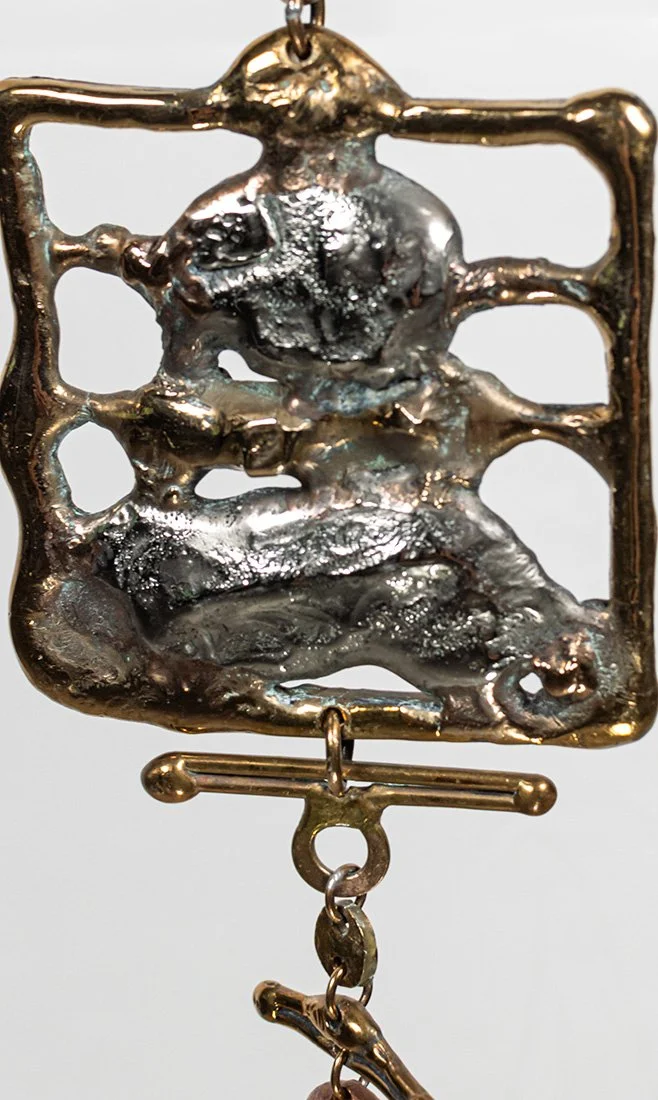
The forms are made by pouring molten bronze directly into sand. No mould, no model. The metal decides its own shape in the instant it lands. I pour, I look, and I combine and assemble by welding and soldering. What is joined is then forged and patinated.
Each work hangs from a single ring, and gravity does what gravity has always done to jewelry. One side answers the other. A face appears in the centre of every one. I did not put it there. It is not a mask. It is what arrives when ornament is carried far enough, the way a face arrives in the mirror when a person has finished arranging themselves and looks up.
On the wall behind each piece, the light leaves a shadow. The shadow is the work with everything taken away: no colour, no patina, no shine. Only the shape, and the shape cannot lie. The mirror flatters; the wall tells the truth.
That is what Composure means. The face we keep, and the act of composing. We assemble our dignity out of what the material gives us, and then we walk into the room, and we are seen.
The four works were made in 2007. Each is unique, and each carries my signature the only way I know how to make it permanent: my thumbprint, cast in bronze.