I believe we live by the same pattern in everything that grows. You cannot force a person, a plant, or a material into becoming something against its nature. My role is to recognize what already exists within it and help it become fully itself.
Whatever the medium, I begin with an uninstructed moment: a cast fragment, an ink spill, a graphite mark, a field of acrylic color. I look until something begins to emerge, then continue what is already there rather than impose an image onto it.
I call this process Preservation of the Flow. My role is not to dominate the material, but to protect what is already there.
The Metal Practice | Fused Multi-Metal Construction
Every metal work begins with molten bronze poured directly onto sand or metal plate, freezing into fragments that carry the texture and logic of their own formation. Brass, copper, and stainless steel are shaped directly under the heat of the torch, their surfaces textured and transformed through sustained heat and pressure. No two fragments are identical. No process can be repeated.
Each fragment carries an unrepeatable texture and direction. I study them quietly until one begins to suggest a path forward.
From there the sculpture grows piece by piece. Additional elements, welded forms, and sometimes stone are added only when they belong to the same visual language. Nothing is forced into place.
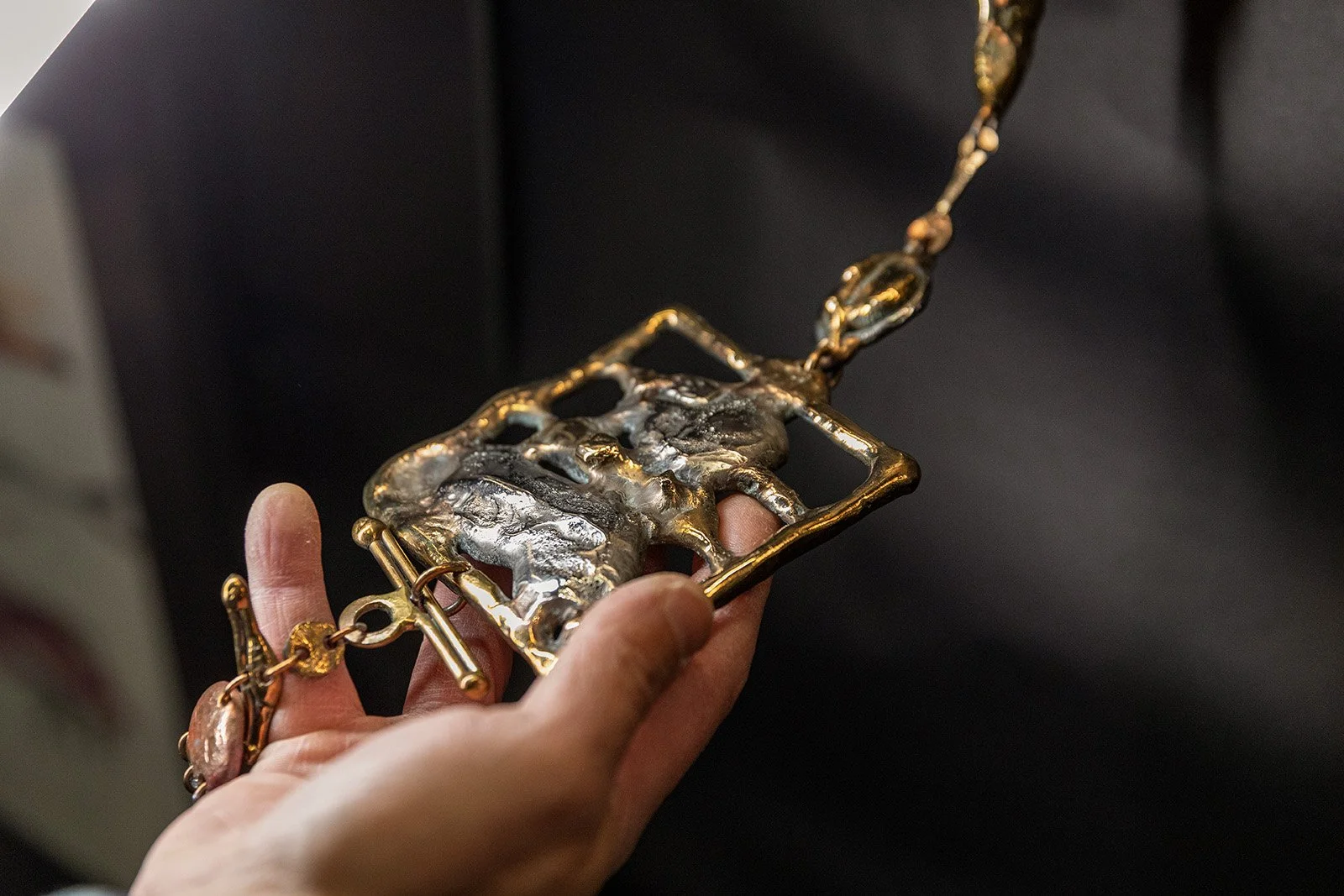
Mask of Rising Sun, patinated bronze, brass, copper, and stainless steel.
Photo: Derek Hille.
Torch Drawing and Welding
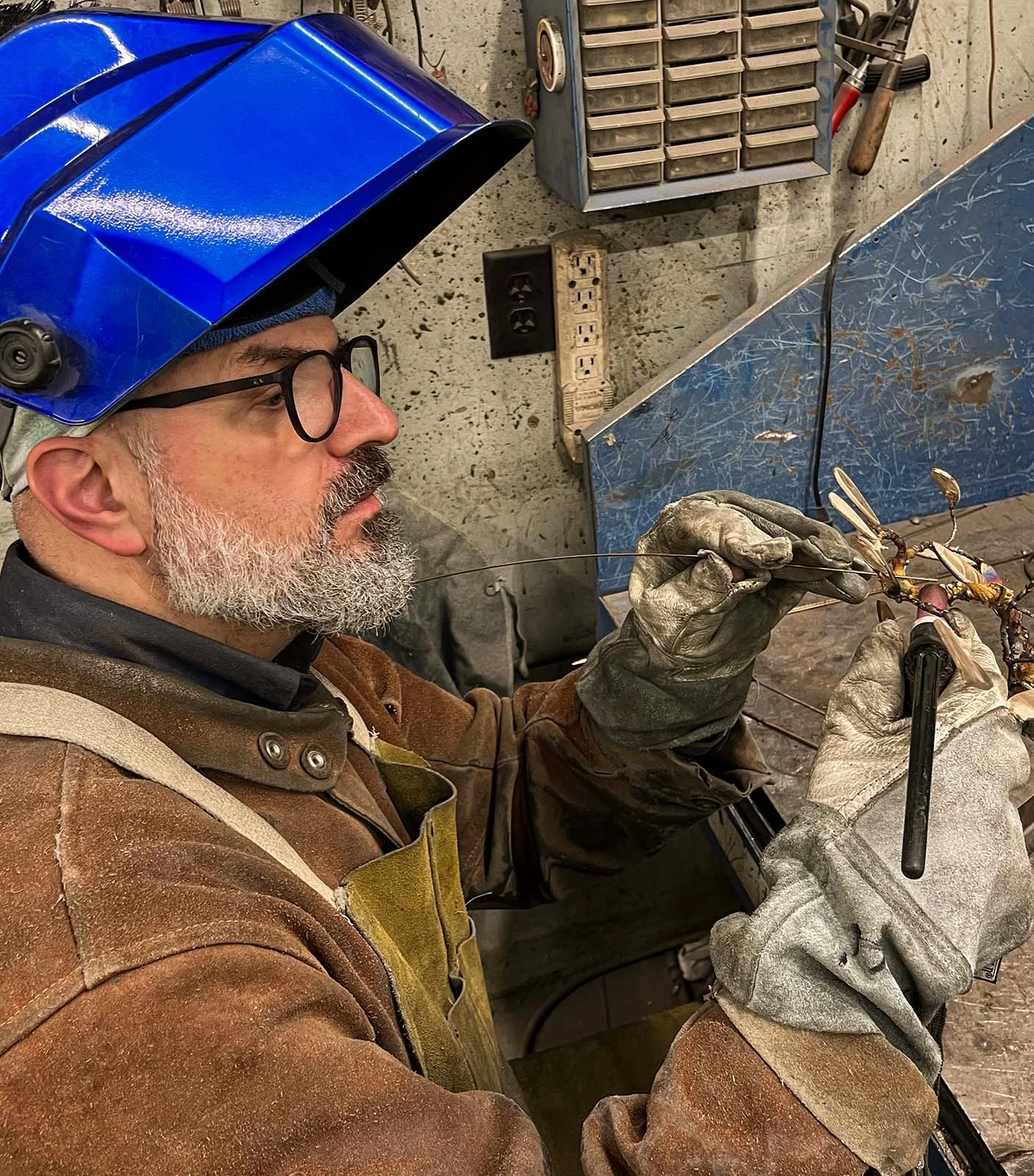
With TIG welding, I draw directly in metal using heat. Welded lines move through the sculpture the same way ink lines move through a drawing: connecting, extending, and holding the composition together.
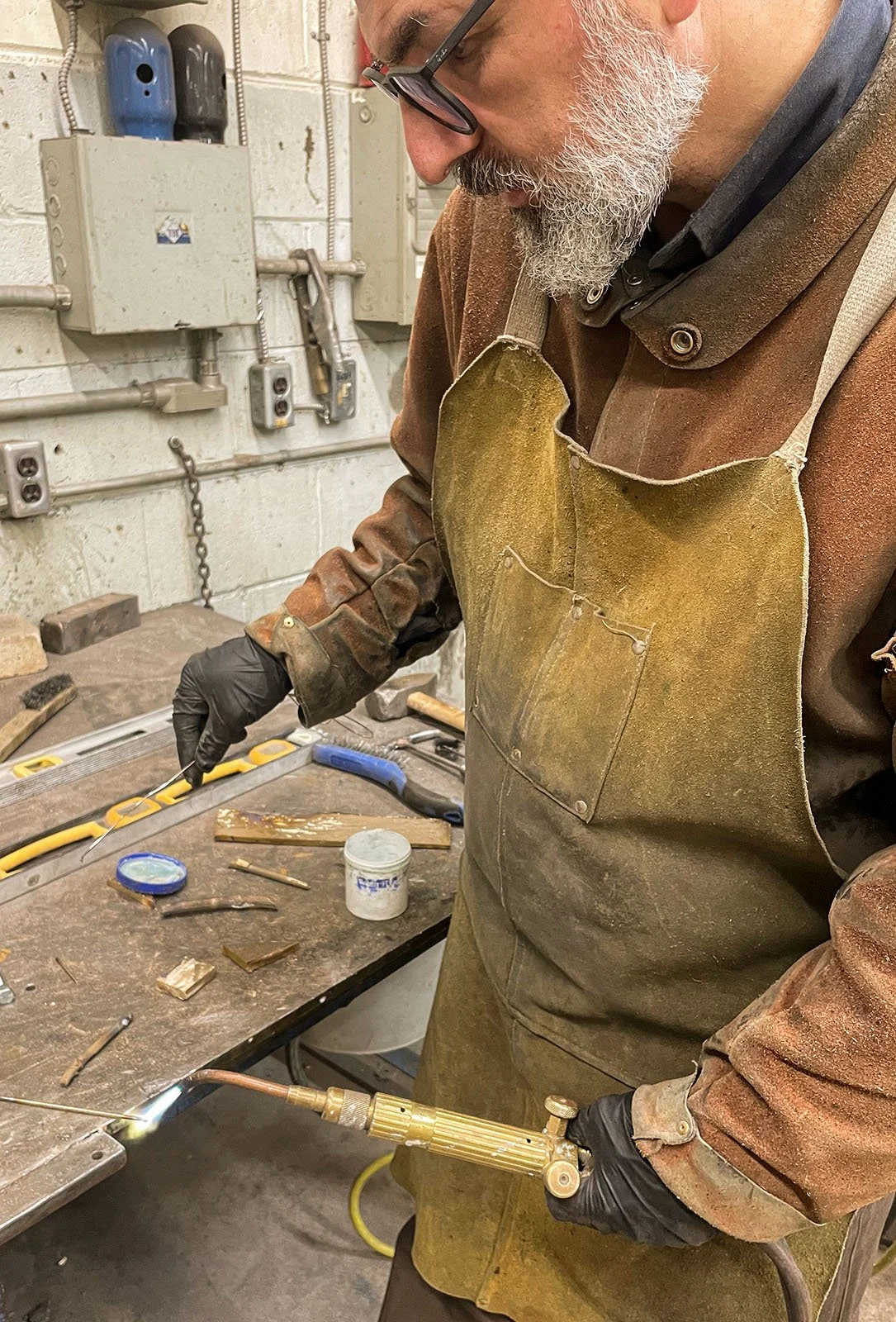
Silver soldering allows finer details to disappear seamlessly into the surface. I work toward a point where the joining becomes invisible and the piece feels grown rather than assembled. The biggest achievement is when the viewer cannot see where my hand ends and nature's hand begins.
Surface and Patination
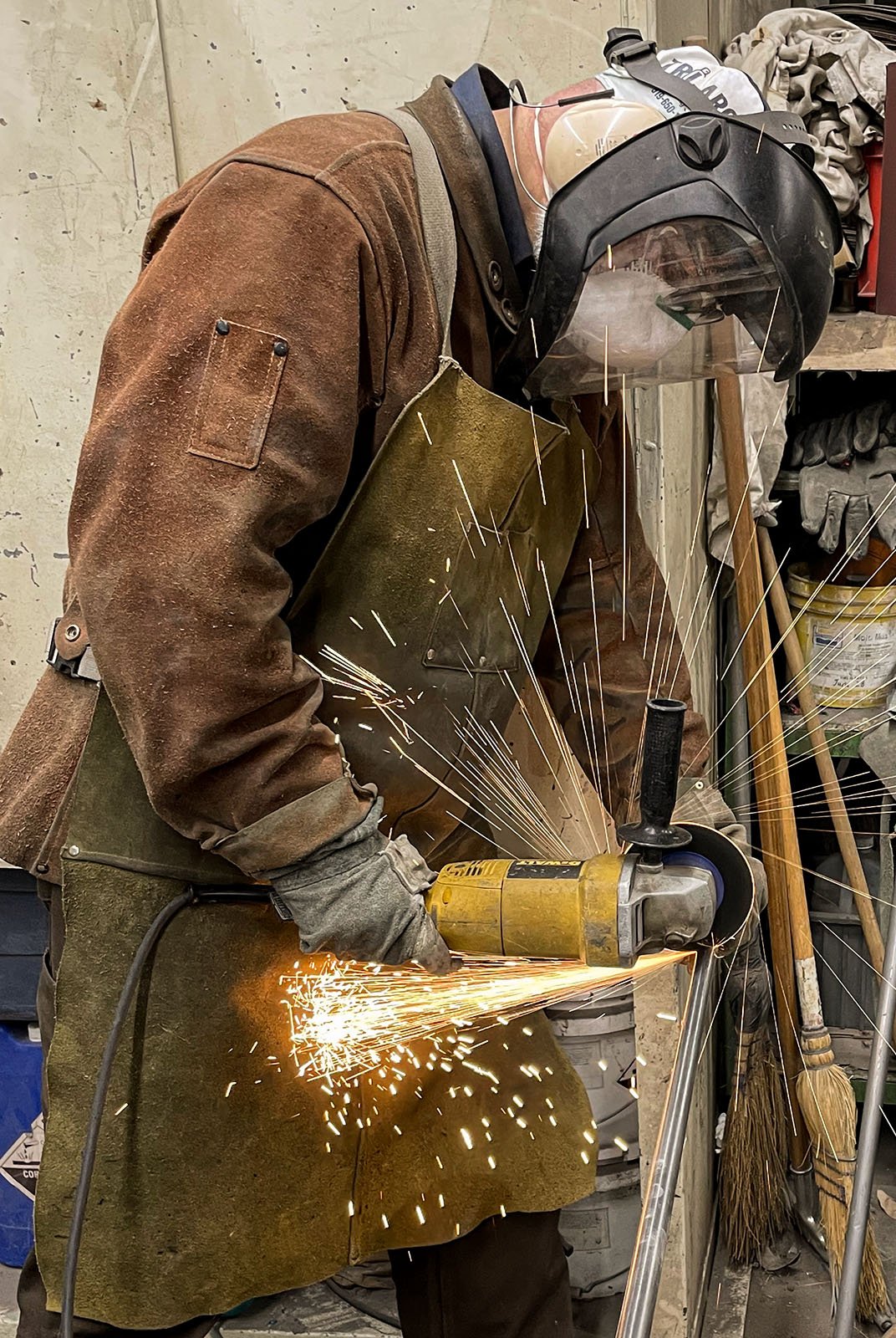
After welding, surfaces are refined through grinding, sandblasting, brushing, and selective polishing. Some areas remain rough while others gather light. The sculpture determines where refinement should happen.
Patination follows. Heat, oxidation, and chemical reactions create surfaces ranging from deep earth tones to luminous greens and reds. These are not painted finishes but living surfaces produced through transformation of the metal itself. Green is not just a green. It is a world of palettes.
Studio practice, metal fabrication
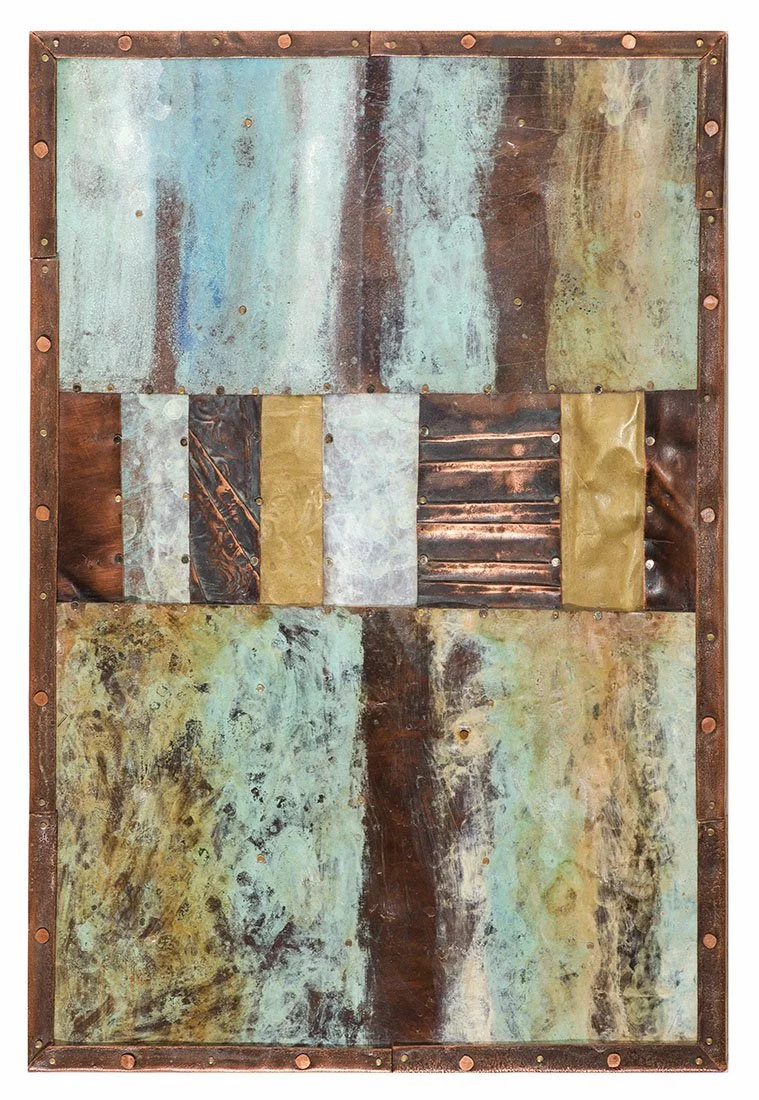
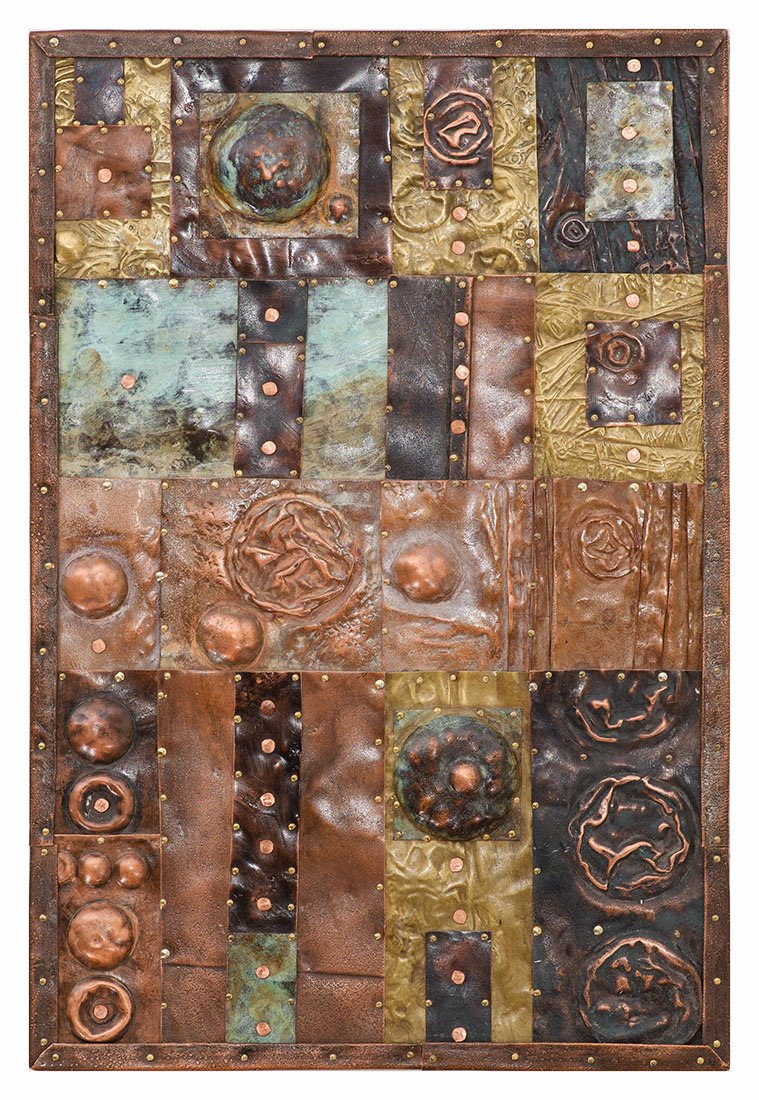
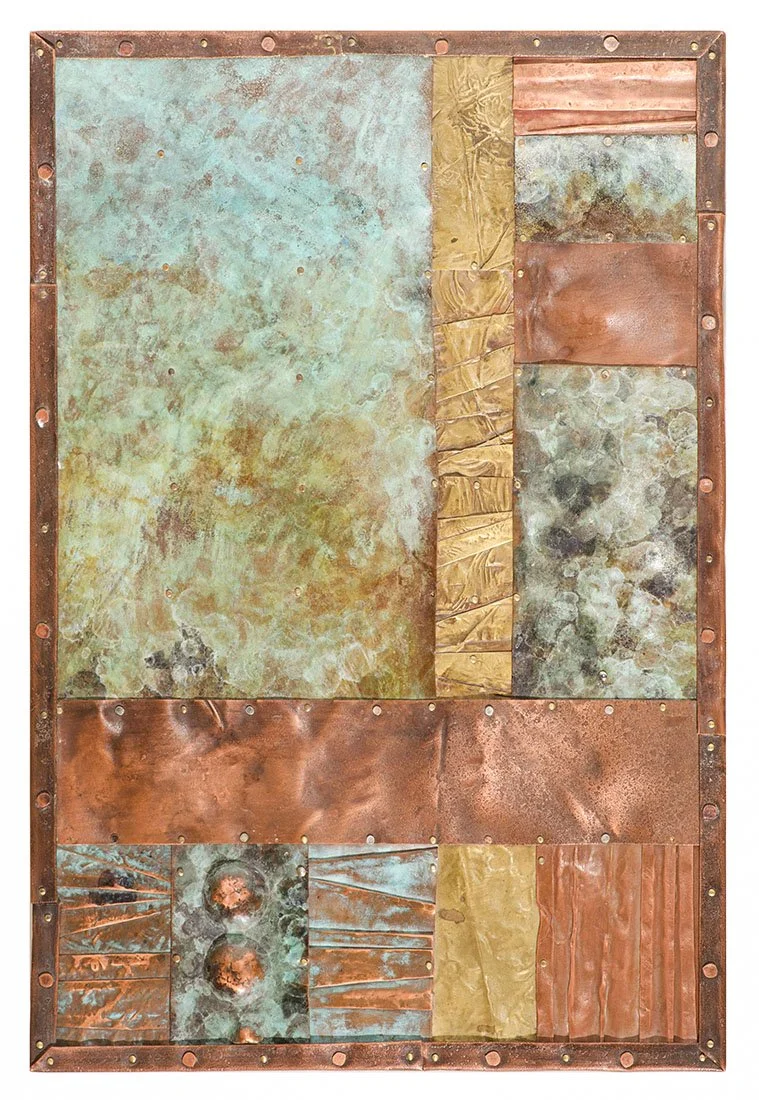
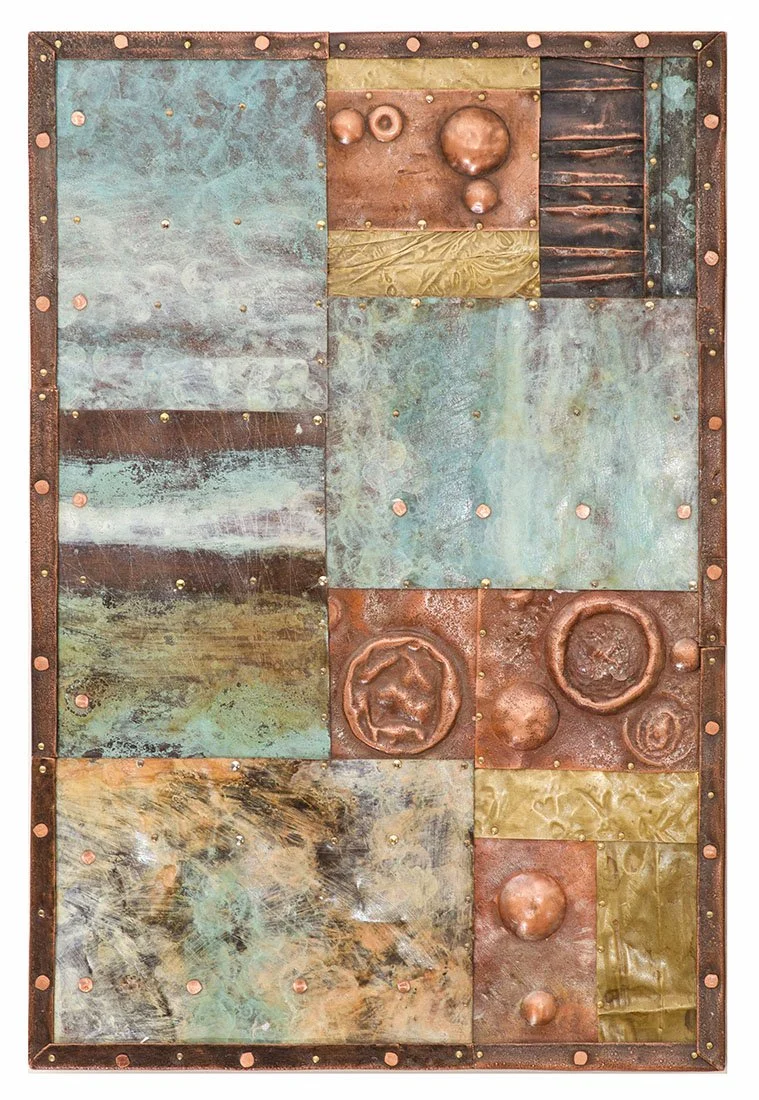
Four Seasons, patinated copper, brass, and bronze on wooden board. Verde, ferric nitrate, liver of sulfur, and bismuth patinas.
Wax and Time
The final stage is selective waxing. Applied to hot or cold metal, wax changes the depth, tone, and reflectivity of the surface.
Some areas are sealed while others remain exposed to continue oxidizing naturally over time. The work does not stop changing when it leaves the studio. The surface continues to evolve with age, air, and light.
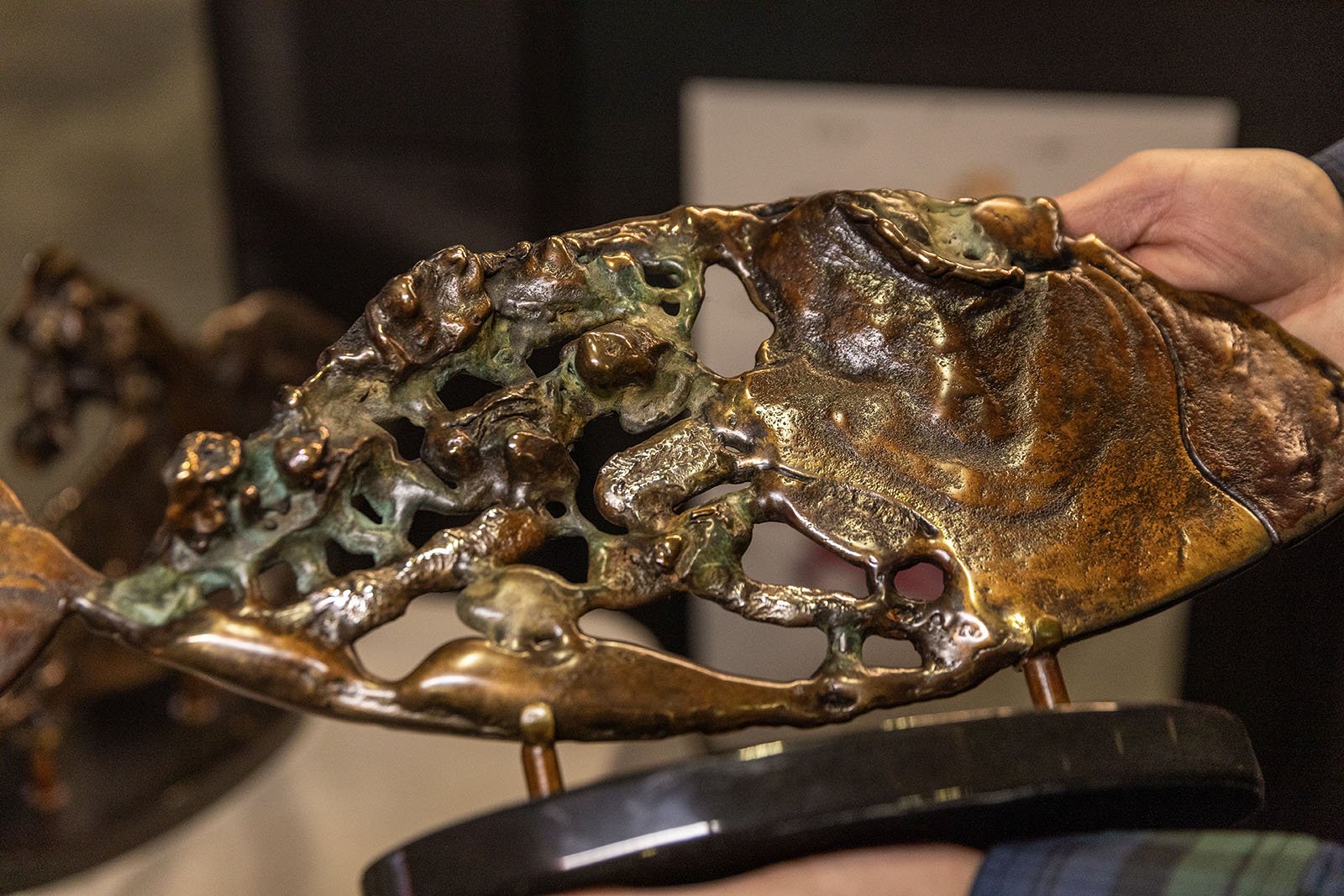
Fugu Fish, patinated bronze, brass, and stainless steel. Surface detail showing selective patination and wax finish.
Photo: Derek Hille.
Drawing and Painting Practice
The drawing practice begins from the same place as the sculpture: emergence rather than control.
It is the same melody played through different instruments. Sculpture is physical, weight-bearing, and spatial. Drawing is linear, precise, and intimate. Both belong to the same language.
Ink on Paper
The drawing practice begins from the same place as the sculpture: emergence rather than control.
It is the same melody played through different instruments. Sculpture is physical, weight-bearing, and spatial. Drawing is linear, precise, and intimate. Both belong to the same language.
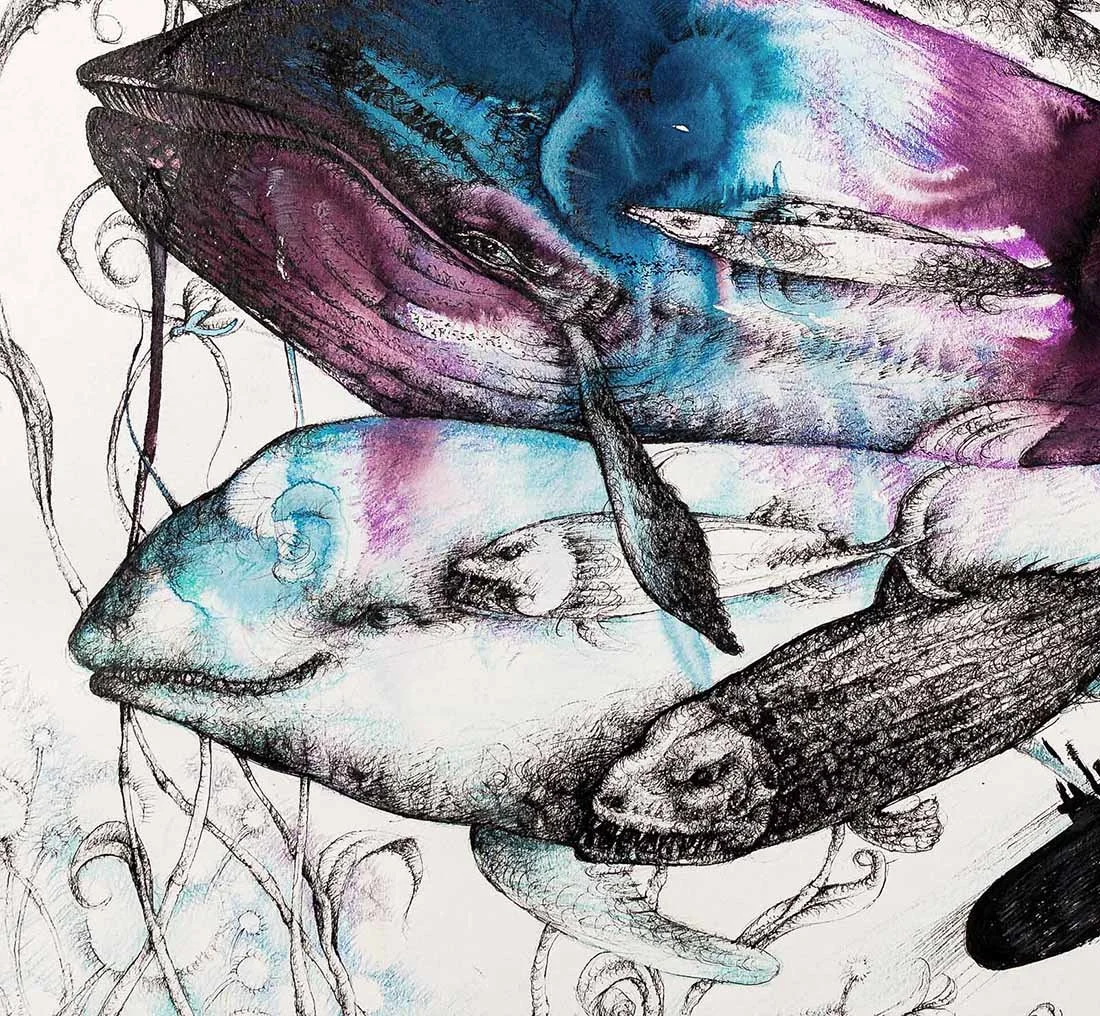
Ghost Ship of Atlantic, ink on paper. Ink wash ground with drawn detail.
Graphite on Paper
Graphite begins through unplanned marks and fragments. A line, ornament, or partial figure becomes the seed for the composition.
Using fine mechanical pencils, I slowly build layers of detail until the image develops its own internal structure and rhythm.
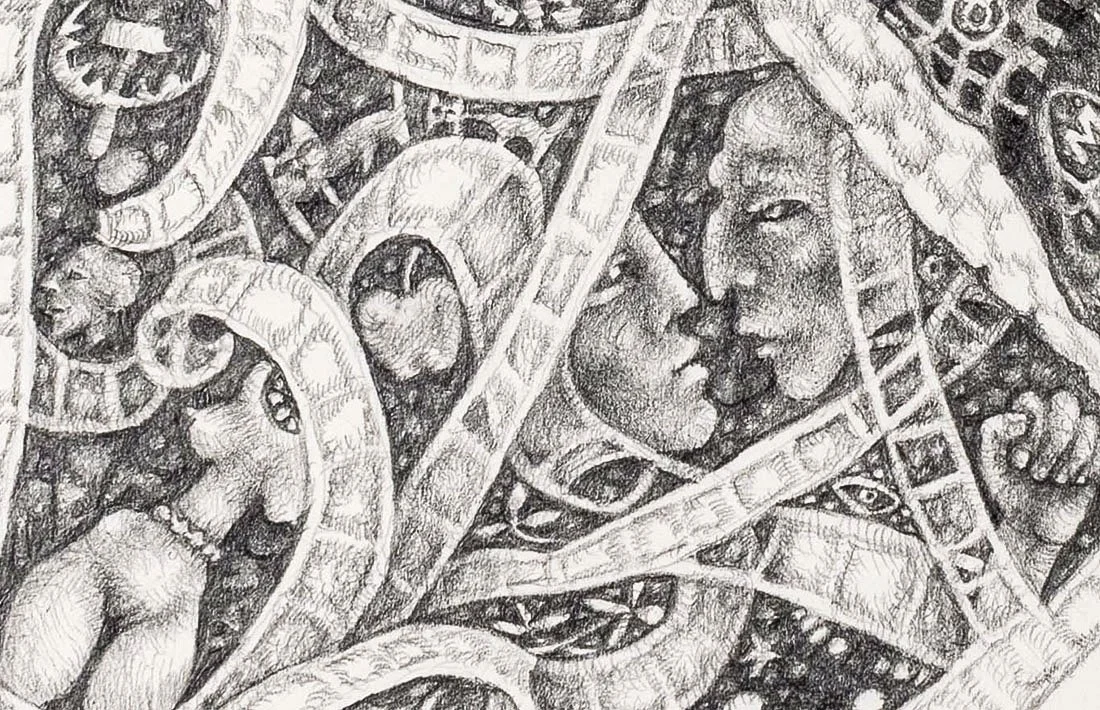
Love of the Serpent, graphite on paper. Detail showing mechanical pencil line work.
Acrylic on Canvas
With acrylic I build surfaces using rollers, scrapers, washes, and layered color fields. I often begin without a fixed image in mind, allowing the surface itself to suggest direction.
The freshness in the finished works comes from restraint. I stop when the painting feels alive rather than fully resolved.
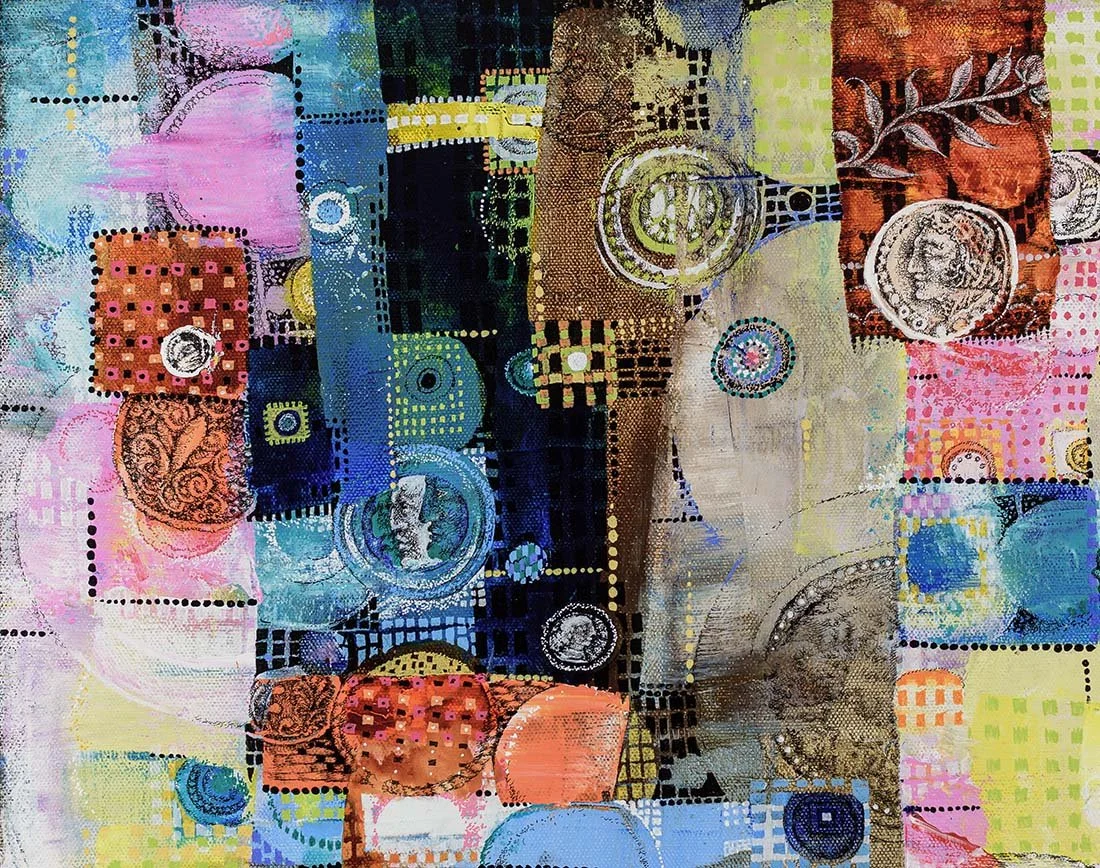
Coin Quilt, acrylic and ink on canvas. Layered acrylic ground showing canvas texture, wash, and ink drawing.
Memory
Much of the work is shaped by memory: the Dnipro River, industrial landscapes, fish markets, architecture, metal yards, and the visual atmosphere of places I lived across Ukraine, Belarus, and Israel.
But memory is not used as an illustration. It returns as texture, rhythm, color, and atmosphere.
The memory is not the subject. It is the medium.
In 2006 I began a wall sculpture called Gust: a figure caught in wind, barely holding herself to the earth. For years the piece remained unresolved.
Only decades later did I understand what it required: not more detail, but an environment. Space. Movement. Elements that respond to real air so the sculpture itself could breathe within the room.
That experience shaped how I understand all my work now. A piece is finished only when it begins to live independently from me.
When viewers return to a work and continue discovering new images, meanings, or memories within it, the work is complete.
That means the piece is alive.